Victorian Property Defects: What Every London Buyer Should Know
Victorian properties dominate London's housing landscape, making up nearly 60% of homes in many boroughs. These beautiful period buildings, constructed between 1837-1901, offer character and charm but come with unique structural challenges. As RICS chartered surveyors at Property Survey London, we've surveyed over 800 Victorian properties and identified recurring defects that every buyer should understand.

Most Common Victorian Property Defects Found in Our Surveys
Survey Statistics
Based on 800+ Victorian property surveys conducted across London (2020-2024):
- 85% had structural movement issues
- 78% showed signs of damp problems
- 65% had roof and guttering issues
- 52% needed electrical upgrades
Complete Victorian Defects Guide
Structural Movement & Subsidence in Victorian Properties
Critical Issue Alert
85% of Victorian properties surveyed show some degree of structural movement. Early identification is crucial for preventing major damage.
Victorian houses were built on shallow foundations using lime mortar and solid brick construction. London's clay subsoil, combined with 150+ years of settlement, creates unique structural challenges that RICS chartered surveyors regularly encounter during building surveys.
Common Causes of Movement
Clay Soil Movement
London's expansive clay reacts to moisture changes, causing seasonal foundation movement particularly during dry summers.
Tree Root Damage
Mature trees near Victorian properties can cause differential settlement as roots extract moisture from clay foundations.
Foundation Inadequacy
Shallow Victorian foundations (often 2-3 feet deep) are insufficient for modern loading and ground conditions.
Drainage Issues
Failed Victorian drains saturate foundations, leading to wash-out and undermining of support structures.
Identifying Structural Movement
RICS Surveyor Observations
External Signs:
- • Stepped or diagonal cracks in brickwork
- • Bulging or leaning walls
- • Gaps around window and door frames
- • Uneven roof lines or sagging
- • Cracked or displaced chimney stacks
Internal Indicators:
- • Cracks in internal walls and ceilings
- • Doors and windows sticking
- • Uneven floors and sloping surfaces
- • Gaps between skirting and walls
- • Separated joints in woodwork
Professional Monitoring Required
Cracks wider than 3mm or showing active movement require structural engineer assessment and monitoring over 12+ months.
Victorian Property Defect Cost Calculator
Get estimated repair costs based on common Victorian property defects
Select Identified Defects:
Estimated Repair Costs
Select defects to see cost estimates
*Estimates based on London averages. Actual costs may vary significantly.
Get Professional Survey
Accurate defect identification requires professional RICS building survey
Get Survey QuoteDamp & Moisture Problems in Victorian Houses
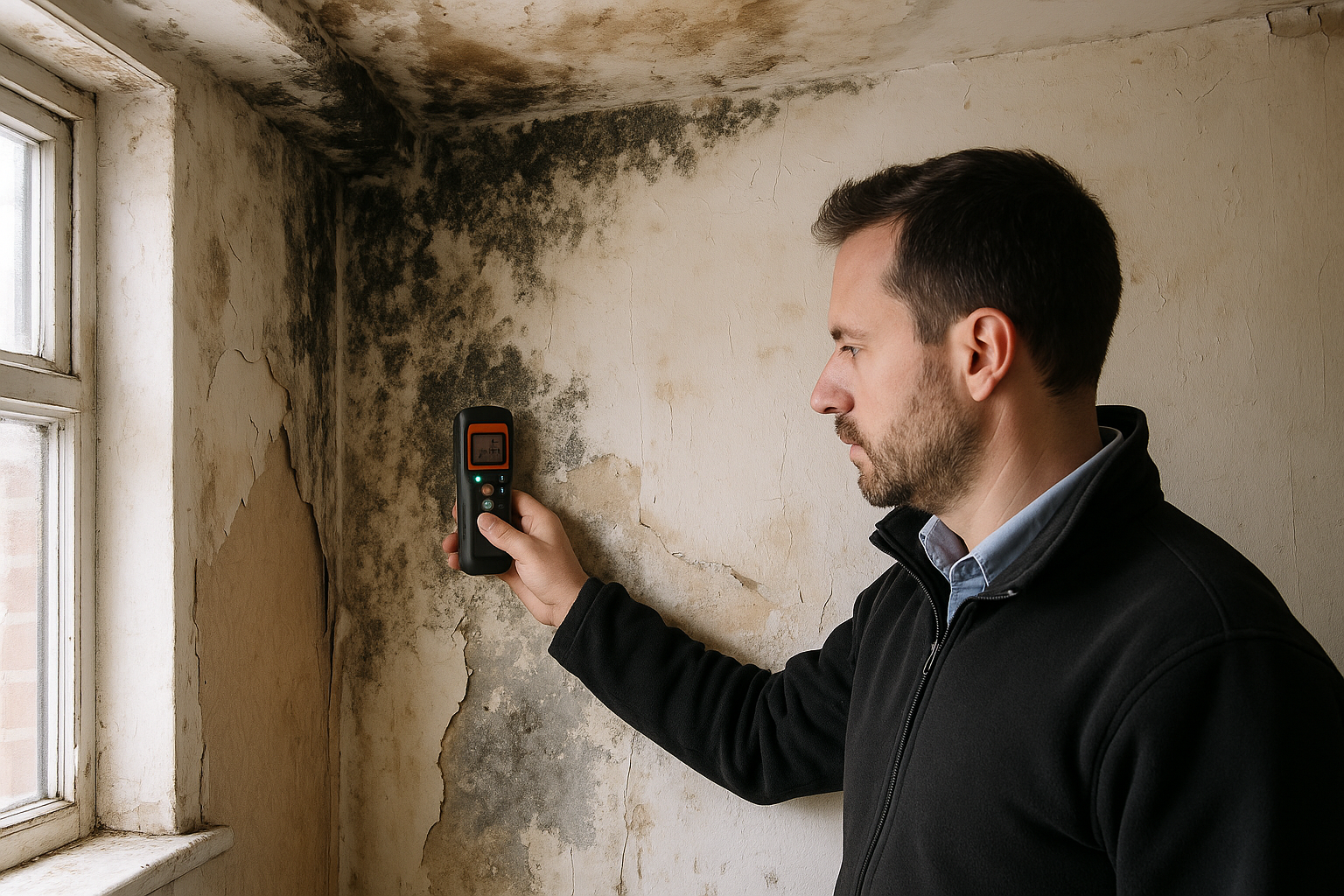
Damp affects 78% of Victorian properties we survey, making it the second most common defect. Victorian construction methods, combined with London's climate and aging building materials, create perfect conditions for moisture problems that require specialist RICS surveyor assessment.
Rising Damp
Affects 45% of Victorian properties due to failed or absent damp-proof courses. Original slate DPCs often crack or become bridged by internal alterations.
Typical Signs:
- • Salt deposits on walls
- • Tide marks up to 1m high
- • Peeling wallpaper at ground level
- • Musty odors in ground floor rooms
Penetrating Damp
Found in 35% of Victorian surveys, usually caused by deteriorating pointing, cracked render, or failing roof elements allowing rainwater ingress.
Common Causes:
- • Deteriorated lime mortar pointing
- • Cracked or blown render systems
- • Blocked or damaged guttering
- • Roof tile displacement
Condensation
Increasingly common in converted Victorian flats with poor ventilation. Modern living patterns create high humidity levels in period buildings.
Risk Factors:
- • Single glazed sash windows
- • Solid wall construction
- • Inadequate heating systems
- • Poor ventilation in conversions
Prevention & Maintenance Guide for Victorian Properties
Proactive Maintenance Schedule
Annual Inspections
Roof & Gutters (Spring)
Clear gutters, check downpipes, inspect for loose or damaged tiles
External Walls (Summer)
Repoint cracked mortar, treat rendering, check for new cracks
Windows & Drainage (Autumn)
Service sash mechanisms, check drainage systems, seal gaps
Ongoing Monitoring
Monthly Checks:
- Monitor existing cracks for movement
- Check for new damp patches
- Test door and window operation
- Inspect basement/cellar for water ingress
💡 Pro Tip: Keep a photo diary of any defects to track changes over time
RICS Survey Recommendations for Victorian Properties
Why Victorian Properties Need Level 3 Building Surveys
Victorian properties require the most comprehensive RICS survey available due to their age, construction methods, and common defect patterns. Property Survey London strongly recommends Level 3 Building Surveys for all Victorian purchases.
Survey Pricing for Victorian Properties
Expert Conclusion: Protecting Your Victorian Property Investment

James Richardson, MRICS - Senior Surveyor Opinion
"Victorian properties offer incredible character and solid construction when properly maintained. However, their age means almost all will have some form of defect requiring attention. The key is early identification through professional RICS surveys, allowing buyers to make informed decisions and budget appropriately for maintenance. Don't let defects deter you – with proper assessment and planning, Victorian houses remain excellent long-term investments in London's property market."
Early Detection
Professional surveys identify issues before they become expensive problems
Informed Decisions
Accurate repair cost estimates help with purchase negotiations
Long-term Protection
Proper maintenance preserves value and prevents deterioration
James Richardson, MRICS
Senior Chartered Surveyor & Victorian Property Specialist
James has specialized in Victorian property surveys for over 15 years, conducting detailed assessments across Central and North London. With expertise in period construction techniques and conservation requirements, he has surveyed over 800 Victorian properties including Grade II listed buildings. James is also qualified as an expert witness and regularly provides professional testimony in Victorian property disputes.