Damp Problems in London Homes: Expert RICS Surveyor Guide
Damp problems are among the most common and costly issues found in London properties. As experienced RICS chartered surveyors at Property Survey London, we encounter damp issues in approximately 40% of the properties we survey. Understanding different types of damp, their causes, and solutions is essential for any London property buyer or owner.
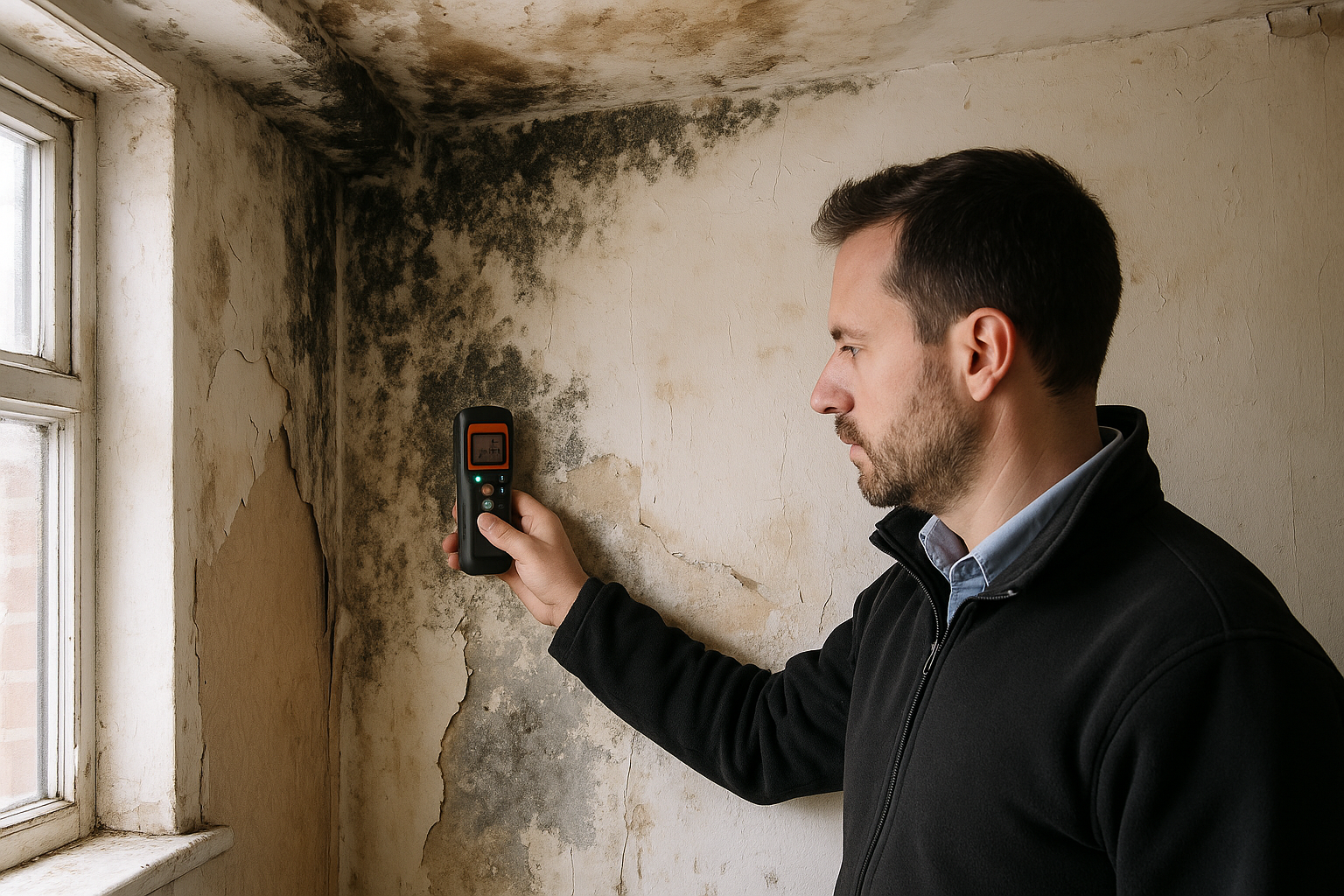
Understanding the Three Types of Damp
Professional damp identification requires understanding the three distinct categories: rising damp, penetrating damp, and condensation. Each has different causes, characteristics, and treatment methods. Property Survey London's chartered surveyors use specialized equipment to accurately diagnose damp problems during building surveys.
Rising Damp
What is Rising Damp?
Rising damp occurs when groundwater moves upward through porous building materials via capillary action. This is particularly common in London's older properties, especially Victorian and Edwardian houses built before effective damp-proof courses (DPC) were standard.
Common Causes
- Missing or failed damp-proof course
- Bridged DPC (soil, render, or debris)
- High groundwater levels
- Poor external drainage
Identification Signs
- Tide marks on walls (usually up to 1m high)
- Salt deposits and white crystalline patches
- Peeling paint and wallpaper at ground level
- Musty odors in affected rooms
- Cold, damp walls near ground level
RICS Survey Recommendation
Rising damp typically requires specialist treatment costing £2,000-£10,000+. Always get professional diagnosis and multiple quotes for remedial work.
Penetrating Damp
What is Penetrating Damp?
Penetrating damp occurs when water enters buildings through external walls, roofs, or windows due to structural defects. London's frequent rainfall and driving winds make properties particularly susceptible, especially those with south and west-facing exposures.
London-Specific Causes
- Pointing failure in Victorian brickwork
- Cracked or porous render systems
- Leaking gutters and downpipes
- Faulty window seals and frames
- Roof tile displacement and flashing failure
Typical Damage Patterns

Surveyor Observations
- • Water stains appearing during or after rainfall
- • Damp patches at specific wall areas
- • Internal mold growth near external walls
- • Ceiling stains below roof defects
- • Window frame deterioration
Condensation Problems
Understanding Condensation
Condensation is the most common moisture problem in London properties, particularly in modern developments and converted flats with limited ventilation. It occurs when warm, humid air meets cold surfaces, creating ideal conditions for mold growth.
High-Risk London Properties
- Converted Victorian houses
- Purpose-built flats with poor ventilation
- Properties with single-glazed windows
- Basement and garden level flats
Prevention & Solutions
Immediate Actions
- • Improve ventilation (extractor fans)
- • Reduce moisture production (cover pans)
- • Increase heating efficiency
- • Use dehumidifiers in problem areas
Long-term Solutions
- • Double glazing installation
- • Mechanical ventilation systems
- • Improved insulation
- • Positive input ventilation (PIV)
Professional Damp Diagnosis: RICS Survey Methods
Accurate damp diagnosis requires professional expertise and specialized equipment. Property Survey London's RICS chartered surveyors use multiple assessment methods to identify moisture sources and recommend appropriate treatments during building surveys and specialist damp investigations.
Survey Equipment & Methods
Electronic Moisture Meters
Protimeter and Tramex devices measure moisture content in walls, providing baseline readings for affected areas.
Thermal Imaging Cameras
FLIR cameras identify temperature variations indicating moisture patterns and hidden water ingress routes.
Salt Analysis Testing
Laboratory analysis of wall samples identifies salt types and concentrations, confirming rising damp presence.
Environmental Monitoring
Relative humidity and temperature logging helps differentiate condensation from structural damp issues.
Diagnostic Decision Tree
Rising Damp Indicators
High moisture readings + salt analysis + ground level distribution = Rising damp diagnosis
Penetrating Damp Signs
Localized moisture + thermal imaging patterns + external defects = Penetrating damp
Condensation Evidence
High humidity + cold surfaces + mold patterns = Condensation problem
RICS Professional Advice
Never rely on single indicators. Professional diagnosis considers multiple factors including building age, construction type, and environmental conditions.
Damp Treatment Solutions for London Properties
Rising Damp Treatment
Chemical DPC Injection
Cost: £2,000-£5,000
Silicone-based injection creating new damp-proof course. 20+ year guarantee typical.
Physical DPC Installation
Cost: £4,000-£10,000+
Cutting new DPC slot and installing membrane. Most reliable long-term solution.
Wall Replastering
Cost: £50-£80 per m²
Salt-resistant renovation plaster to 1m+ height. Essential after DPC treatment.
Penetrating Damp Solutions
External Repairs
Cost: £500-£5,000+
Repointing, render repair, roof fixes. Address source before internal work.
Tanking Systems
Cost: £2,000-£8,000
Basement waterproofing using membrane systems. Suitable for severe cases.
Cavity Wall Treatments
Cost: £1,000-£3,000
Cavity wall ties, insulation replacement, DPC tray installation.
Condensation Control
Ventilation Improvement
Cost: £500-£2,000
Extractor fans, PIV systems, MVHR units. Most cost-effective solution.
Insulation Upgrade
Cost: £1,000-£5,000
Internal/external wall insulation reducing cold bridge effects.
Heating Efficiency
Cost: £2,000-£8,000
New boiler, radiator upgrades, smart heating controls for consistent temperatures.
Preventing Damp Problems: Property Owner Guide
Regular Maintenance Schedule
Monthly Checks
- Check for new damp patches or staining
- Inspect gutters and downpipes for blockages
- Clean bathroom and kitchen extractor fans
- Monitor relative humidity levels (should be 45-55%)
Annual Inspections
- Professional roof and chimney inspection
- External pointing and render condition check
- Window frame and seal integrity assessment
- Drainage system clearance and testing
Professional Advice: When to Call RICS Surveyors
Damp problems in London properties require professional assessment to ensure accurate diagnosis and appropriate treatment. Property Survey London's RICS chartered surveyors provide comprehensive damp investigations as part of building surveys or specialist reports.
Expert RICS Survey Services
Specialist Damp Survey
Comprehensive investigation using professional equipment and laboratory analysis
Treatment Monitoring
Post-treatment inspections to verify effectiveness and ongoing property condition
Insurance Reports
Professional documentation for insurance claims and warranty validation

Sarah Mitchell, MRICS
Lead Building Surveyor & Valuer
Sarah specializes in residential property surveys across London with particular expertise in damp diagnosis and treatment assessment. With over 12 years' experience as a RICS chartered surveyor, she has investigated over 1,200 damp-related cases across all London boroughs, working closely with specialist contractors to ensure effective remedial solutions.